Untouched nature, wild beauty and Byzantine churches
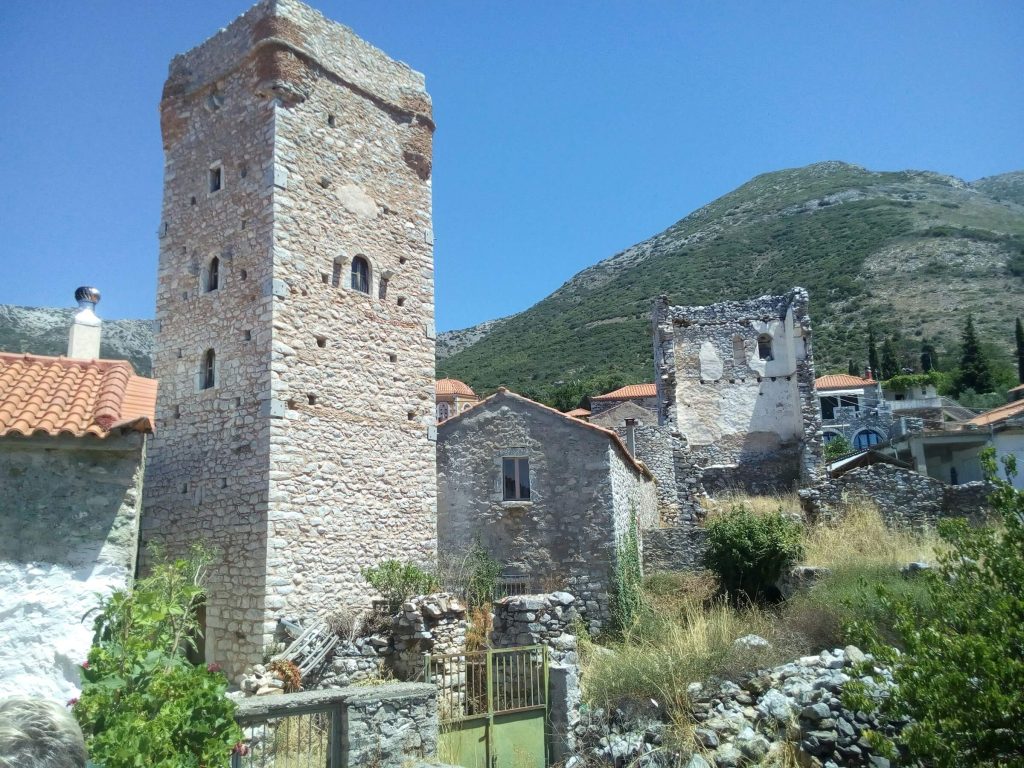
Neochori, near which the THEA MARRE villa is located, is amphitheatrically built on a hill, among olive groves and oak trees. It was built at the end of the 17th century when the area was under Venetian rule. The visitor is immediately fascinated by the Mania architecture where stone dominates, but also by the picturesque alleys of the village which are always clean and well-kept.
Mani, however, was first conquered in the 13th century by the Franks, who built castles to control the area. For example, on a hill above the Stupa, in a position offering a wonderful view, the ruins of the Frankish castle “Gisterna” or “Beaufort”, built in the 13th century by William Villeardouin, are preserved. Starting from Stoupa there are paths that lead walkers to traditional villages of Messinian Mani. A classic and easy route of about 50 minutes (on foot) is the one that connects Stoupa with Neochori, through Lefktro, and offers excellent opportunities for exploring Nature.
East of the Stoupa is Lefktro, with the church of Panagia from 1802, and the village of Pyrgos, a balcony with an amazing view, traditional color and the Byzantine church of Panagia, “Pano Panagia” as it is called.
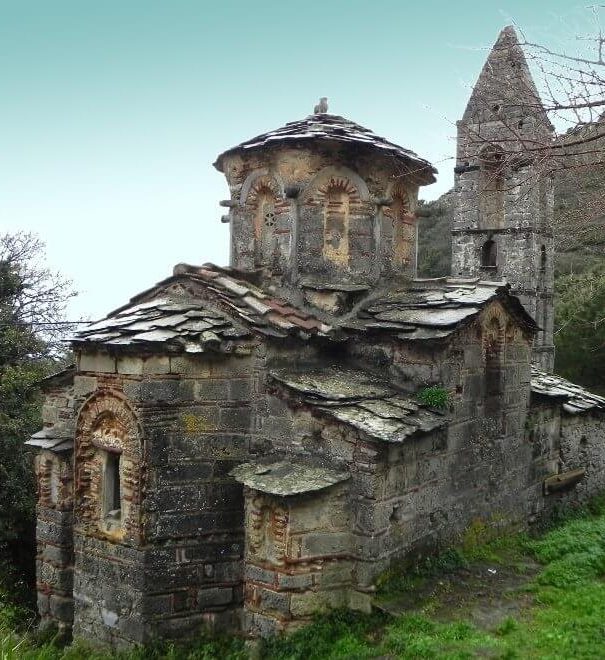
After Pyrgos, travelers can go in two directions: either to Karyovouni, a mountain village with a picturesque square, fountain and running water, or to Kastania. Very close to THEA MARRE, in the village of Kastania, less than 10 minutes by car, is the 12th century Byzantine church dedicated to Saint Peter.In the shape of a cross, it is full of dramatic 13th century frescoes and is a Cultural Heritage monument that awes the visitor. In the village, invisible even from up close and folded into the mountain, more than 10 Byzantine churches are preserved, which testifies to the strategic position it had in the past.
There, in Kastania, is also Pyrgos Duraki (or Douraki). It is a stone-built, five-story complex, which has been founded on natural rock and rises to a height of 15 meters. It was named after Captain Constantis Durakis (or Dourakis), who played an important role in the activity of thieves in the area before the Revolution of 1821. In fact, Thodoris Kolokotronis also stayed in its tower in 1806, during the great persecution of thieves from the Turks.
The top naturalistic attraction in the area is the Noupanti gorge, which begins to form from the Monastery of Vaidenitsa, 3 kilometers after Saidona, on the road to Exohori and ends after about 8 kilometers at the beach of Foneas, between Stoupa and Kardamili. The canyon is full of caves and has a degree of difficulty, however with the help of a local guide you can cross it safely and relatively comfortably. The average time required to cross it is about 5 hours, so take care of the relevant supplies.
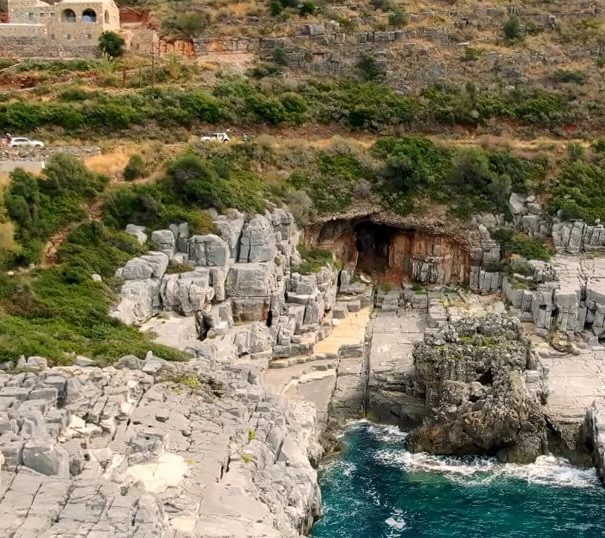
Finally, it is worth a visit for photos, sunbathing and swimming for the adventurous at the wildest beach in Greece: The Refuge. In less than 15′ from THEA MARRE, next to the village of Agios Dimitrios, there is an imposing geological formation with marble slabs inward and huge rocks that are wet by the wild waves. The beach is a natural extension of a huge cave, estimated at 1600 meters and considered one of the largest in the country. A wonder of nature that has natural pools for diving from a height of up to 12 meters.
Ερωτήσεις?
Εάν έχετε οποιαδήποτε απορία μην διστάσετε να επικοινωνήσετε μαζί μας!